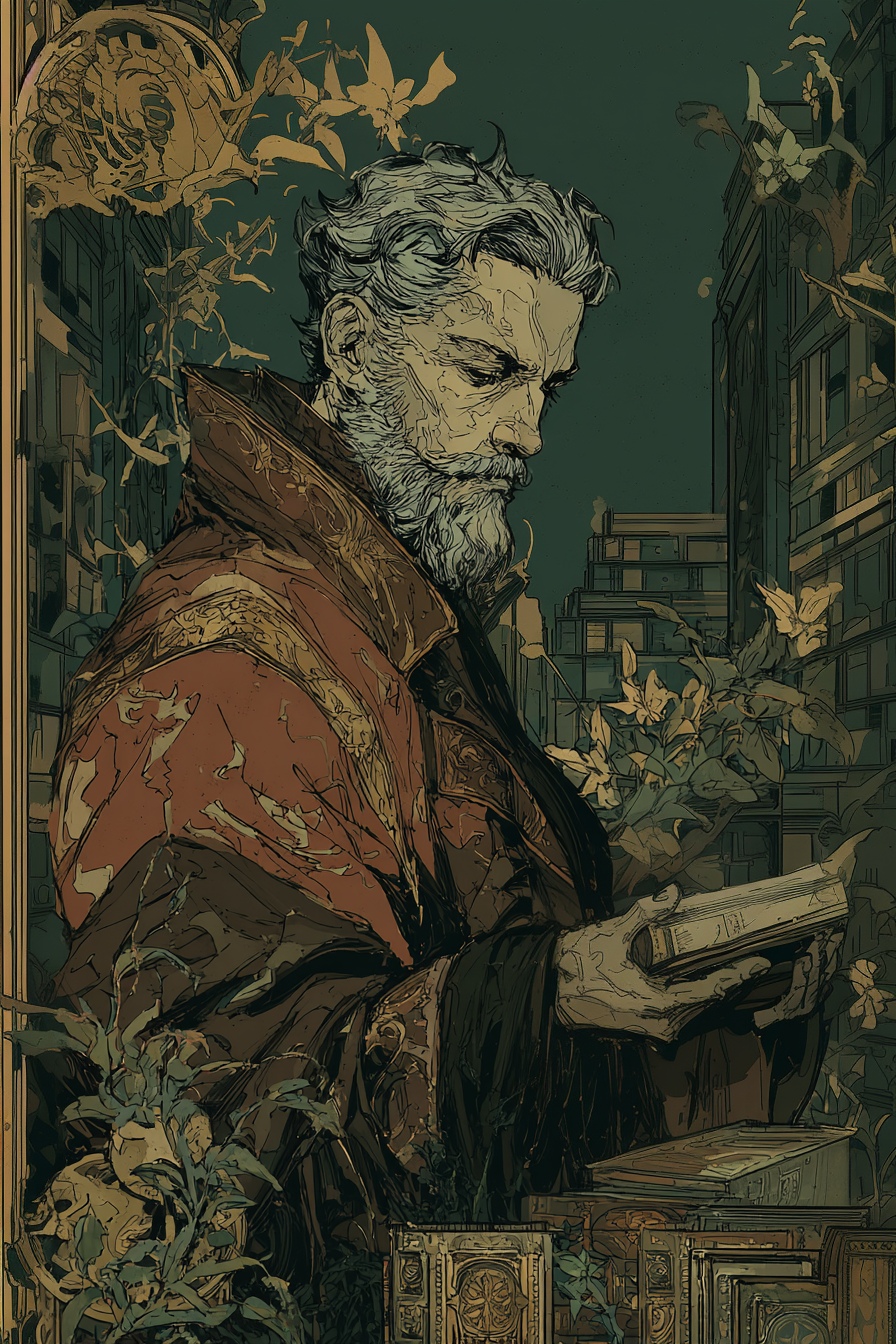
Character Overview
This man remembers everything. He is the colleague who can recall the exact date of a meeting three years ago, the friend who brings up details from conversations you've forgotten, the husband who knows every story his wife has ever told him and when she told it. The brain is "the source of the nerves, of all sensation, and of voluntary motion" (Galen), enhanced perception that sees patterns others miss, rational analysis that processes information systematically. Earth transforms this into methodical preservation. He doesn't just remember, he organizes what he knows. His home office is lined with carefully labeled notebooks: journals dating back decades, research files sorted by topic, reference materials indexed and cross-referenced. He reads voraciously and takes meticulous notes, creating systems that allow him to retrieve any piece of information he's encountered. At work, he's the institutional memory, knows where old files are stored, remembers precedents from years past, can trace the history of any decision. When his children ask about their family history, he doesn't just tell stories, he produces documents, photographs, timelines he's compiled. He shows love through careful attention: he listens with focus that makes people feel heard, asks follow-up questions that prove he was paying attention last time, builds detailed understanding of what matters to those he cares for. His presence is steady and thoughtful.
Earth shares the brain's cold but adds dryness. ONE APART temperamentally. Double cold means extreme withdrawal, a possibility of "fearful" caution, and desperate need for external heat. But earth's dryness transforms mind's soft receptivity into permanent retention. Avicenna: "The lingering of anger and satisfaction, imagined and memorized, indicates dryness", and mind-earth holds EVERYTHING. Every detail, every pattern, every piece of information stored permanently. The brain's extreme softness takes in data easily. Dryness locks it in forever.
He is the archivist whose systematic preservation serves wisdom. People come to him when they need to understand how something came to be, when they need context that only memory can provide. His precise recall provides historical understanding that informs present decisions. His systematic organization creates searchable knowledge spanning decades. When balanced, this builds institutional wisdom: organizations that learn from their past, families that honor what came before, cultures where memory serves rather than constrains. Yet when imbalanced, this careful preservation becomes obsessive hoarding. Double cold creates a man who collects information compulsively but never uses it, drowning in data he can't synthesize, buried under knowledge he won't share. His office becomes a tomb of unread books, filing cabinets full of articles he might need someday, hard drives of research he's never organized. The brain's analytical capacity combined with earth's "hunger and need" (Avicenna) creates paralysis: every decision requires consulting more sources, gathering more data, waiting until he knows enough to be certain. But certainty never comes. He spends evenings researching topics obsessively: health conditions after minor symptoms, financial strategies he never implements, historical events with no practical relevance. When stressed, he retreats further into his archives, reorganizing files, re-indexing notes, finding comfort in the past rather than engaging the present. His memory becomes his prison: he catalogs every slight, every failure, every moment of embarrassment, replaying them in meticulous detail during sleepless nights. Dry retention means he NEVER releases these. He uses his knowledge to avoid risk, wielding information as shield against action rather than tool for wisdom.
His challenge is learning that knowledge exists to serve life not replace it, that wisdom means using information not just accumulating it, that the deepest understanding comes from living not just archiving. His strength is systematic preservation that provides valuable context. His shadow is paralyzed hoarding that drowns in data.
Temperament Foundation
PRIMARY ORGAN: Mind/Brain (cold-moist, seat of rational soul, source of enhanced perception) ELEMENTAL PATH: Earth (cold-dry) Share cold (fearful withdrawal, need for external heat) but differ on moist vs dry. Brain's extreme softness takes in information easily. Earth's dryness locks it permanently. Double cold creates maximum withdrawal. Dry retention prevents releasing anything once perceived.
Strengths
- 01Precise memoryRecalls details with accuracy, maintains institutional and family knowledge
- 02Systematic organizationCreates searchable systems for information across decades
- 03Pattern recognition across timeSees connections and precedents others miss
- 04Careful attentionListens deeply, remembers what matters to people he loves
- 05Thorough researchInvestigates topics with patience and methodical completeness
- 06Historical understandingProvides context and precedent that informs present decisions
Shadow Side
- 01Information hoardingCollects compulsively but never synthesizes or uses what he knows
- 02Analysis paralysisResearches endlessly, unable to act until achieving impossible certainty
- 03Escapist researchRetreats into archives and data rather than engaging present reality
- 04Overwhelming detailBuries simple questions in tangents and excessive information
- 05Memory as weaponUses precise recall to catch contradictions rather than understand growth
- 06Knowledge as avoidanceWields information as shield against risk and vulnerability
Leadership Style
The Mind-Earth leads through preserving institutional memory and providing historical context that ensures organizations don't repeat past mistakes.
The Mind-Earth leads through archival wisdom and consultative guidance. His leadership preserves what matters, maintains continuity across changes, offers perspective that only careful documentation can provide. Since "the source of the nerves, of all sensation, and of voluntary motion is the encephalon" (Galen), enhanced brain function creates superior perception. Earth's dryness ensures nothing is forgotten. People come to him when they need to understand precedent, when they need to trace how decisions were made, when they need the full story. His systematic organization makes institutional knowledge accessible. When balanced, this creates real wisdom: organizations that learn from their past, teams that honor what came before while moving forward, cultures where memory serves decision-making. His careful preservation prevents repeating mistakes, his historical understanding provides essential context. But his leadership can become paralyzing historicism, so focused on precedent that innovation becomes impossible, so buried in data that present needs go unmet, so committed to documenting everything that nothing actually happens. His challenge is learning that the best archivists serve the present through the past.
Growth Path
Core Virtue
Action (praxis), using knowledge to serve life not replace it, synthesizing and applying what's preserved.
Virtue to cultivate: Action (praxis), using knowledge to serve life not replace it, synthesizing and applying what's preserved.
The Mind-Earth's path is learning that information exists to be used not just preserved, that wisdom means synthesis and application not just accumulation. The brain's "soft substance is always more easily altered" (Galen) takes in information easily, but earth's dryness locks everything in permanent retention without release. Double cold creates extreme withdrawal into archives. His remedy lies in developing the fire his nature lacks: the courage to act despite incomplete information, the warmth to value present relationships over perfect recall, the willingness to risk being wrong rather than remaining safely uncertain. Prayer asks for wisdom not just knowledge. Fasting from research to practice presence. Community demands he contribute rather than merely document. Physical work forces engagement beyond mental collection.
His vice is curiosity divorced from purpose: the endless accumulation of information for its own sake, the hoarding that serves anxiety rather than understanding, the memory that imprisons rather than informs. His temptation is becoming the archivist of a life unlived, who knows everything but does nothing, who remembers the past perfectly while missing the present entirely. Earth's "hunger and need" applied to knowledge creates insatiable collection. His virtue emerges when precise memory serves current needs, when systematic knowledge informs decisive action, when careful preservation of the past enriches rather than replaces engagement with the present. Then he becomes the true archivist whose memory serves wisdom, whose knowledge guides rather than paralyzes, whose systematic preservation points to the God who remembers all things and acts decisively within time.
Discipline Practice
Strengths to CREATE SPACE FOR:
- Systematic knowledge organization - creates accessible systems
- Careful documentation - preserves important insights and patterns
- Pattern preservation across time - maintains valuable knowledge
- Precise memory - recalls details that serve wisdom
Weaknesses to COUNTERBALANCE:
- Information hoarding - collects everything, uses nothing
- Analysis paralysis - researches endlessly, acts never
- Drowning in data - so much preserved that nothing's accessible
- Knowledge as avoidance - shields against action with research
Morning Protocol (First Hour)
WHY: Must force application before collection instinct takes over.
- Time outside in nature - walk, garden, sit outdoors - get out of head (counter withdrawal)
- Manual labor - build something, fix something, physical work (counter mental hoarding)
- No information consumption - no reading, podcasts, news until action taken (counter collection)
Throughout Day
- Limit information intake to set times - 30 minute blocks only (counter compulsive collection)
- Manual work or physical tasks between thinking - gardening, cleaning, building (counter mental dominance)
- Immediate application of insights - do something with what you learn (counter hoarding)
- Regular deletion and purging sessions - weekly file cleanup (counter accumulation)
Evening Protocol (Last Hour)
WHY: Get completely out of head, stop collecting.
- Physical activity only - walking, stretching, manual tasks (counter mental withdrawal)
- No reading, no consuming information - complete mental rest (counter collection)
- Physical hobbies, social time, manual work - anything but thinking (counter archives)
Weekly Non-Negotiables
- Purge large amounts of collected information - delete files, notes, saves (counter hoarding)
- Complete projects using archived knowledge - deploy what you've saved (leverage strength)
- Spend full days without information consumption - complete mental fasting (counter collection)
- Apply one piece of preserved knowledge to current decision (leverage strength)
Reading Type: Applied knowledge, synthesis and practical deployment, action-focused
Core Discipline Principle: Synthesize and apply relentlessly, your systematic preservation creates value through deployment, not hoarding. Use what you know.
At his best: The Archivist, precisely remembering and systematically organizing, preserving knowledge that serves wisdom and provides essential historical context for present decisions.
At his worst: The Hoarder, obsessively collecting and paralyzed by over-analysis, drowning in data while avoiding life, using knowledge as shield against risk and vulnerability.
At His Best
The Archivist, precisely remembering and systematically organizing, preserving knowledge that serves wisdom and provides essential historical context for present decisions.
At His Worst
The Hoarder, obsessively collecting and paralyzed by over-analysis, drowning in data while avoiding life, using knowledge as shield against risk and vulnerability.
Know your wiring
Train with your constitution.
Your type profile maps your complete wiring. The app turns it into daily practice. Protocols calibrated to your specific constitution.
Start Training, Free